CULTURE | 4 MIN READ
Bad Bunny Did Not Need the Super Bowl to Own It
February 4, 2026 | 7:53 PM
The Super Bowl has always functioned as America’s cultural mirror – a single night where music, sports, advertising, and national identity collide. For decades, visibility on that stage meant validation. But this year, something subtler happened.
Bad Bunny did not need to perform to be present.
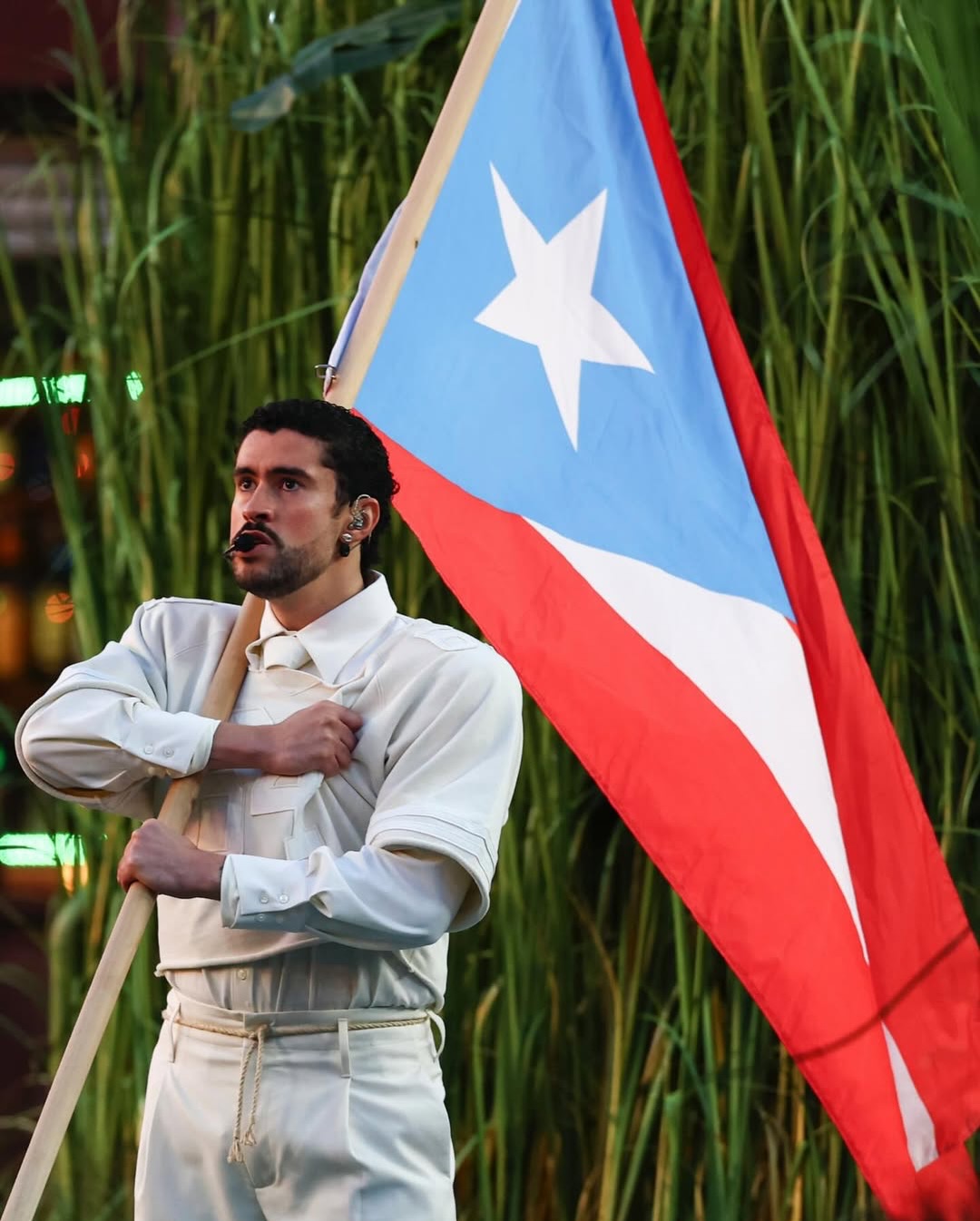
His absence — or rather, his non-centrality — did not dilute his relevance. If anything, it sharpened it. Conversations around the Super Bowl still orbited him: his global reach, his refusal to translate himself for American consumption, his ability to exist adjacent to the spectacle without being absorbed by it.
This is the new cultural economy. Influence is no longer measured by who occupies the biggest platform, but by who does not need it.
Bad Bunny represents a generation of artists whose power comes from cultural specificity, not universality. He does not soften language, aesthetics, or politics for broader appeal. And yet, he permeates spaces once considered inaccessible without assimilation — including the most American broadcast event of the year.
The Super Bowl used to crown cultural relevance. Now, it merely reflects it. And in that reflection, Bad Bunny stands as proof that the center has shifted — geographically, linguistically, and symbolically.
The backlash that followed was not really about the Super Bowl. It was about discomfort.
Bad Bunny has never positioned himself as palatable. He stands openly for love, fluidity, softness, and contradiction — values that still unsettle audiences when they appear in spaces coded as traditionally masculine, patriotic, or American. The criticism was not rooted in performance quality or relevance; it was a reaction to what he represents.
And what he represents is impossible to ignore.
Latin pop is no longer a “wave” or a crossover moment — it is infrastructure. It fills stadiums across continents, dominates streaming platforms without English translation, and defines fashion, language, and rhythm for a global generation. Bad Bunny sits at the center of that shift not because he tries to, but because he refuses to dilute himself to fit expectations.
That refusal is precisely why the hate feels misplaced. He does not provoke for shock value. He does not perform rebellion. His stance is quiet but unwavering: love is not negotiable, identity is not a costume, and visibility does not require permission. In a cultural moment still wrestling with those ideas, his presence alone becomes confrontational.
The Super Bowl has historically rewarded conformity dressed up as spectacle. Bad Bunny exists outside that economy. He does not ask to be understood, nor does he wait to be invited. His influence arrives fully formed, already affirmed elsewhere — by millions who recognize themselves in his language, his softness, his refusal to harden.
That is why the criticism misses the point. Bad Bunny does not need defending. He is not trying to win approval from institutions that are only now catching up to the culture he’s been shaping all along.
And that is the most defiant part of it all:
He stands for love — unapologetically — and the world keeps moving toward him anyway.
Bad Bunny no responde al rechazo con ruido, sino con memoria. Su trabajo siempre ha sido un archivo emocional: de barrios, de afectos, de momentos que no se pueden traducir ni domesticar. Frente a la crítica, él no endurece el mensaje ni se repliega; mira hacia atrás, hacia lo íntimo, hacia lo que importa de verdad cuando el espectáculo se apaga.
Porque al final, cuando pasa el ruido y se disuelve la controversia, lo único que queda es el recuerdo — y la necesidad de haber estado más presente.