OPINION | 3 MIN READ
Watching Bhavitha Mandava as an Indian Woman
February 7, 2026 | 5:27 AM
Watching Bhavitha Mandava is not a neutral experience when you are an Indian woman. It is layered – shaped by recognition, distance, and an unspoken awareness of how rarely fashion allows South Asian women to exist without explanation. Her presence feels familiar, not because it mirrors a shared aesthetic, but because it reflects a way of moving through fashion spaces that many Indian women instinctively understand.
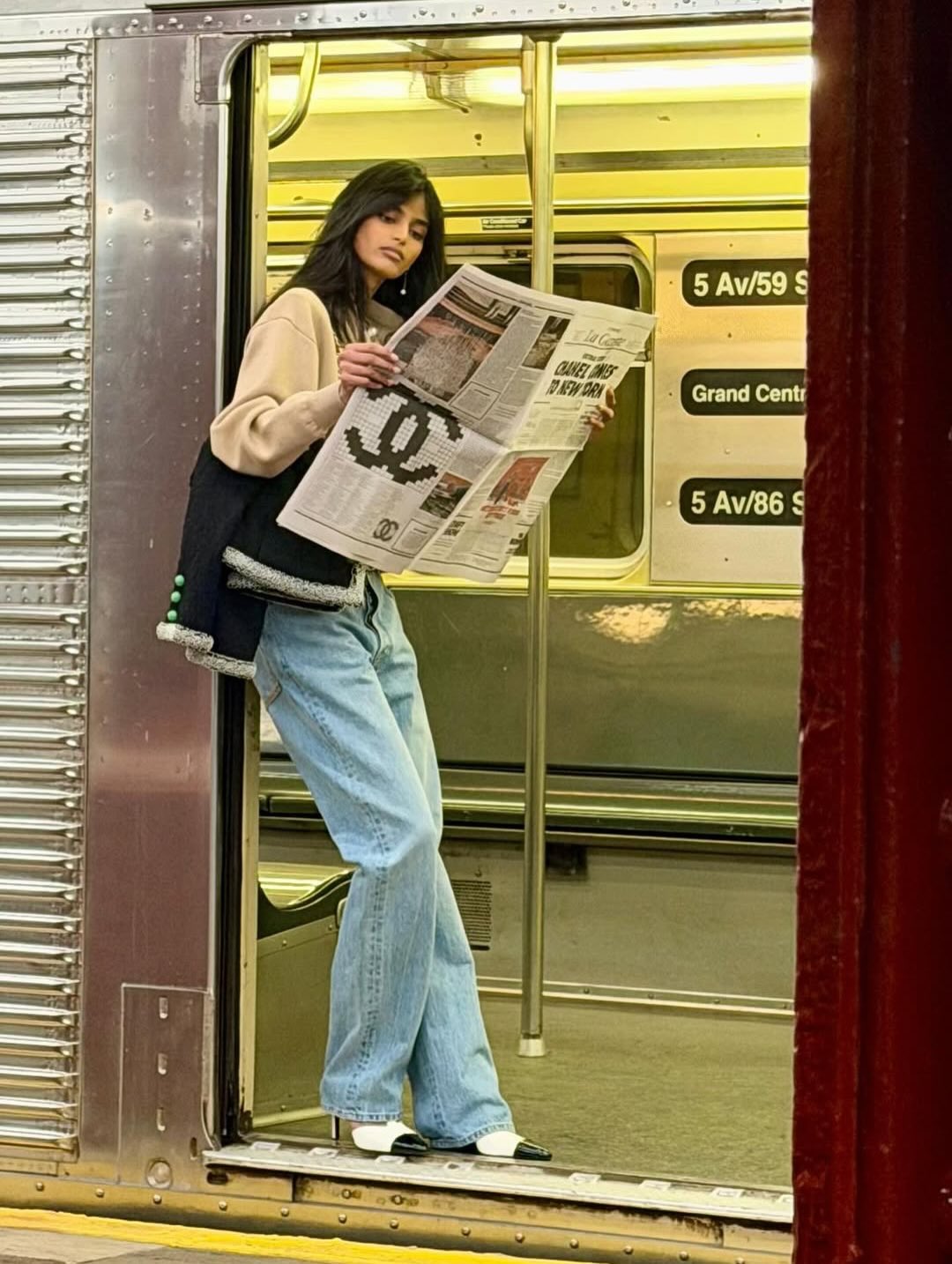
Bhavitha Mandava is a model, not a personality manufactured through social media visibility. She was scouted while riding the subway – noticed in motion, not positioned to be found. That detail matters. It places her entry into fashion outside the economy of self-surveillance and self-promotion that now defines so much of the industry. She did not curate her way into visibility. She was already visible.
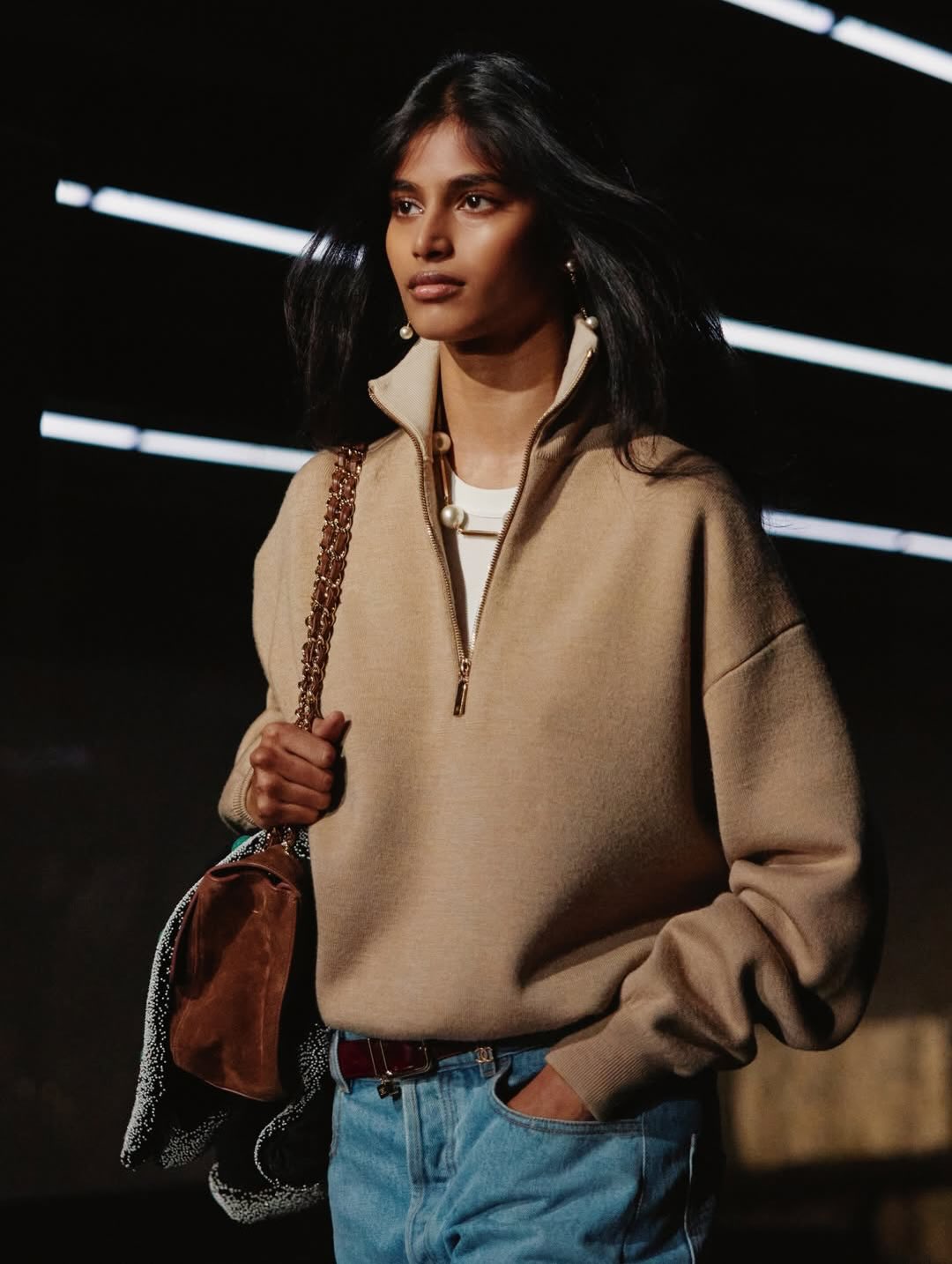
This origin shaped how her presence reads. There is no urgency in her style, no performative need to assert relevance. Her fashion choices feel intuitive rather than strategic – grounded in proportion, texture, and ease. In a landscape obsessed with signaling, that restraint becomes striking. It suggests confidence without spectacle, authority without insistence.
For Indian women navigating global fashion culture, this kind of visibility carries weight. Subtlety has often been misread as timidity, restraint as limitation. Indian women have long been encouraged to either amplify themselves into palpability or soften themselves into invisibility. Bhavitha’s presence resists both. She occupies space calmly, without diluting herself or exaggerating identity for legibility.
What makes her compelling is not that she represents something new, but that she refuses to perform what others expect. Her style does not translate culture for consumption. It exists alongside it. There is no urgency to aestheticize heritage or turn identity into narrative. That refusal to over-explain is not accidental – it is a quiet assertion of belonging.
In an industry increasingly shaped by algorithmic exposure, being scouted feels almost radical. It implies recognition without self-branding, legitimacy without constant output. Bhavitha’s presence reflects a form of fashion authority that is not earned through volume or visibility, but through consistency. She does not chase attention; she holds it.
This matters because fashion still struggles with allowing Indian women to exist without qualifiers. Without spectacle. Without being framed as exceptions or symbols. Bhavitha Mandava’s presence suggests another possibility – one where Indian women are neither muted nor magnified, but simply seen.
That, in itself, is defiant.
Not because it demands space, but because it assumes it.