FASHION | 4 MIN READ
Pieter Mulier's Years at Alaïa
February 4, 2026 | 4:17 PM
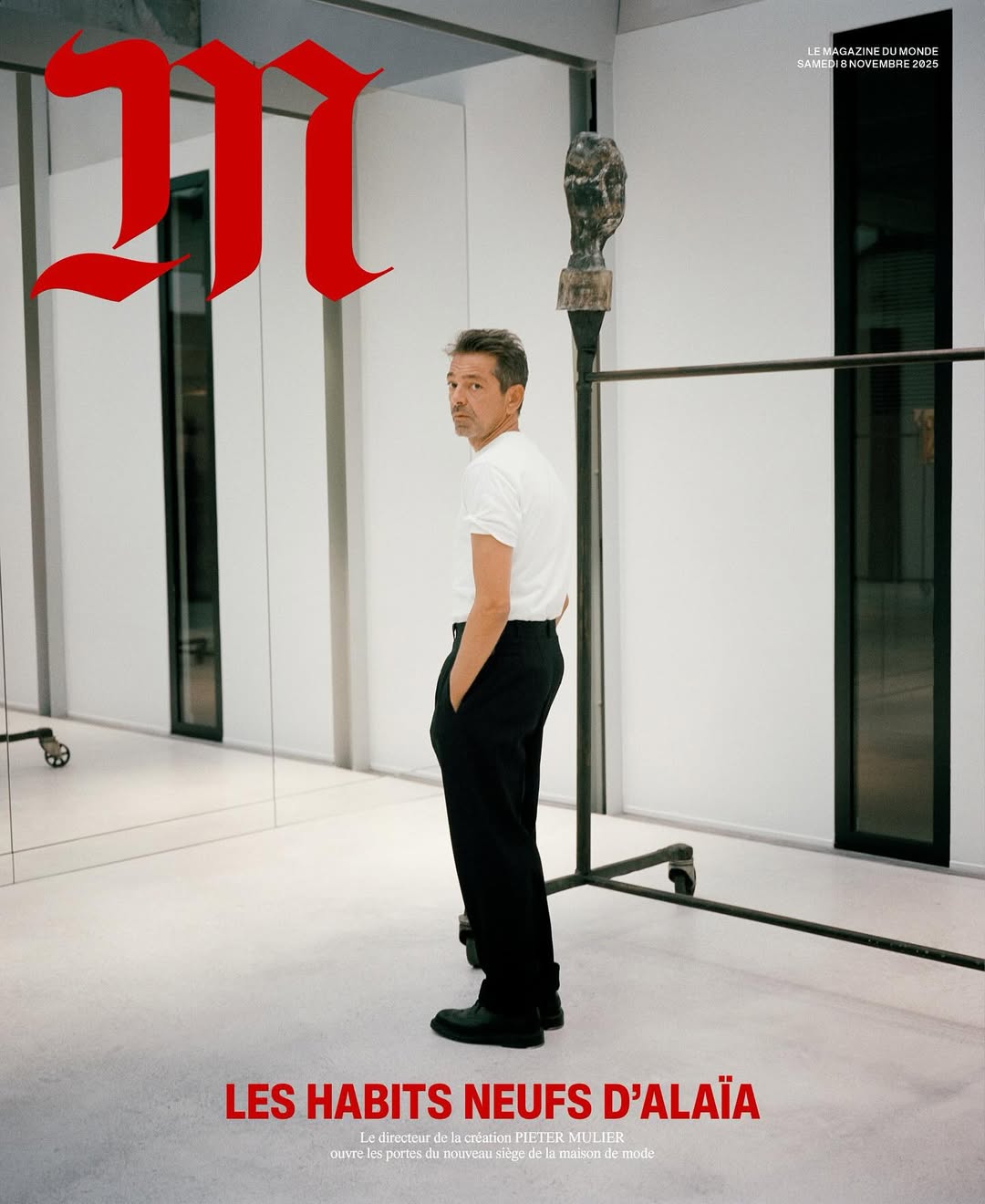
Pieter Mulier’s years at Alaïa have been defined less by transformation and more by attention. Attention to the body, to construction, to the discipline that has always separated Alaïa from the rest of the fashion landscape. In an era obsessed with visible reinvention, Mulier’s approach has been notably restrained.
Taking on a house so deeply tied to its founder is a delicate task. Alaïa is not a brand built on seasonal narratives or conceptual spectacle. It is built on form – on how fabric holds, releases, and returns to the body. Under Mulier, that foundation has not been disrupted. It has been sharpened.
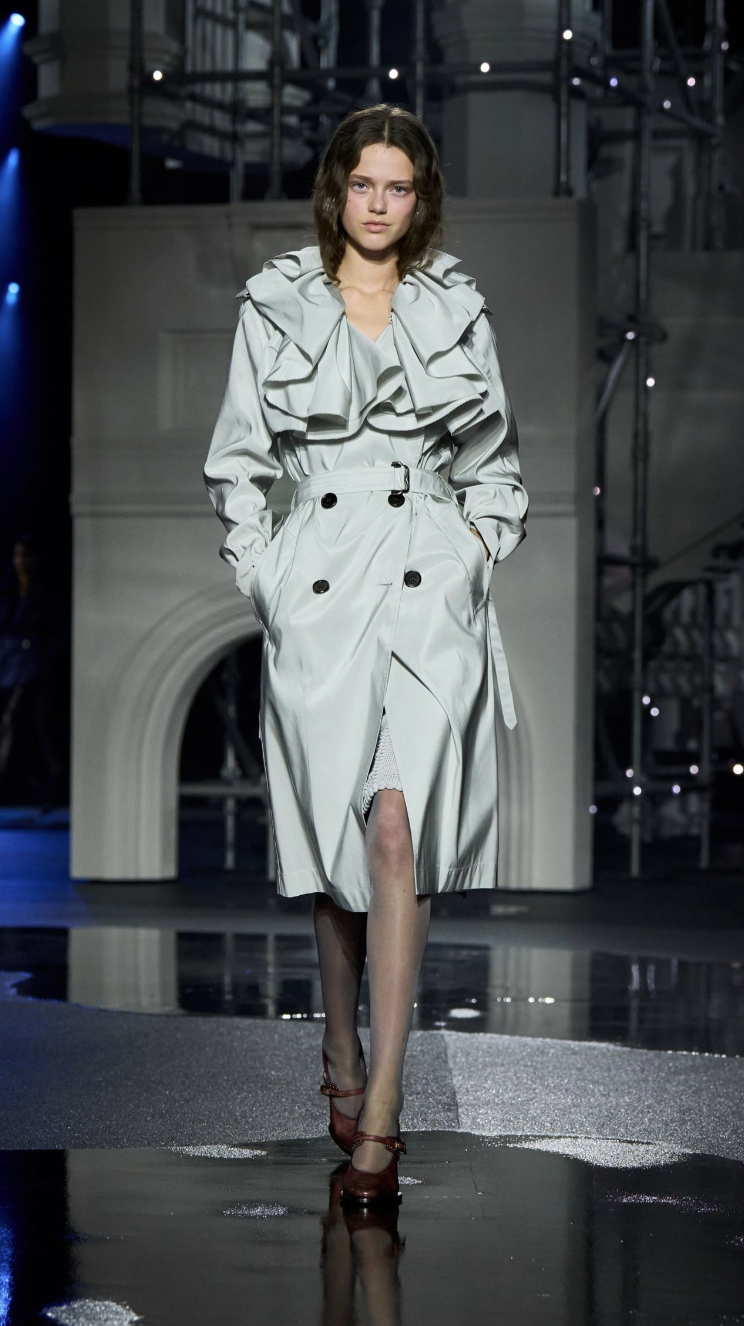
Silhouettes remain close, sculptural, and deliberate. There is a continued emphasis on stretch, cut, and tension – garments defined not to decorate the body, but to understand it. Rather than chasing novelty, Mulier has worked within Alaïa’s established language, refining proportions and updating execution without erasing memory.
What makes his tenure compelling is this refusal to overwrite the house. At a time when creative directors are often expected to announce themselves immediately, Mulier has allowed the work to speak through continuity. His Alaïa feels modern not because it rejects the past, but because it insists on its relevance.
At the core of Alaïa has always been an obsession with the body – not as an object to be styled, but as a structure to be understood. Under Pieter Mulier, this relationship was not reimagined so much as reaffirmed. His collections consistently returned to the principles that defined Azzedine Alaïa’s work: control, precision, and intimacy between garment and wearer.
Specific collections made this especially clear. Dresses clung and released with calculated tension, often sculpted through stretch knits, bonded fabrics, and meticulous seam placement. Cut-outs were never decorative; they followed anatomy. Skirts curved around hips rather than flaring away from them. Even when silhouettes shifted – introducing sharper shoulders, elongated lines, or heavier outerwear – the dialogue with the body remained central.
Mulier’s Alaïa showed a deep understanding of restraint as design intelligence. There were no unnecessary gestures, no diluted experimentation. Accessories echoed the same philosophy: sculptural footwear, controlled hardware, and silhouettes that extended the line of the body rather than interrupting it. Each season felt like a continuation rather than a correction.
What distinguished his years at the house was patience. Mulier resisted the pressure to modernise Alaïa through spectacle. Instead, he trusted the strength of the house’s codes – allowing subtle adjustments in proportion, fabrication, and styling to signal evolution. In doing so, he proved that modernity does not require disruption; sometimes it requires discipline.
This makes his tenure feel complete rather than unfinished. His Alaïa was not about reinvention or personal imprinting. It was about stewardship – holding space for a house whose identity was already fully formed, and ensuring it continued to speak with clarity in a changing fashion landscape.
That clarity makes his next chapter all the more interesting.
Mulier’s move to Versace represents a sharp shift in vocabulary. Where Alaïa is inward, controlled, and anatomical, Versace is expressive, outward, and unapologetically symbolic. It trades restraint for provocation, discipline for drama. And yet, his years at Alaïa suggest that this transition may be less contradictory than it appears.
If Alaïa trained Mulier in precision, Versace offers him scale. If Alaïa sharpened his understanding of the body, Versace will challenge him to amplify it. The question is not whether he can adapt – it is how that discipline will translate when applied to a house built on excess.
In that sense, his years at Alaïa do not read as a closed chapter, but as preparation. A period of refinement before expression. Whatever Versace becomes under his direction, it will be shaped by the quiet rigor he practiced at Alaïa – a reminder that even the loudest fashion statements are strongest when grounded in control.
And that may ultimately define Pieter Mulier’s trajectory: not as a designer of eras, but as one who understands when to hold back – and when to release.